Somebody Could Do Something About This
How to design life systems for regulated nervous systems

What We Mean When We Talk About “Systems”
Systems govern every aspect of our lives. They’re the invisible structures that hold everything together—the water we swim in. They’re so ubiquitous that we opened our latest Salon by answering the most basic question: What even is a system?
A set of structures through which processes unfold
(or)
External stimuli acting on all organisms, sentient or not.
On its own, a system is neutral. No agenda. No intention. But the way we experience a system—or the way it’s imposed on us—can make life feel expansive and humane or claustrophobic and miserable.
Starting the Inquiry: What Systems Are We Living In?
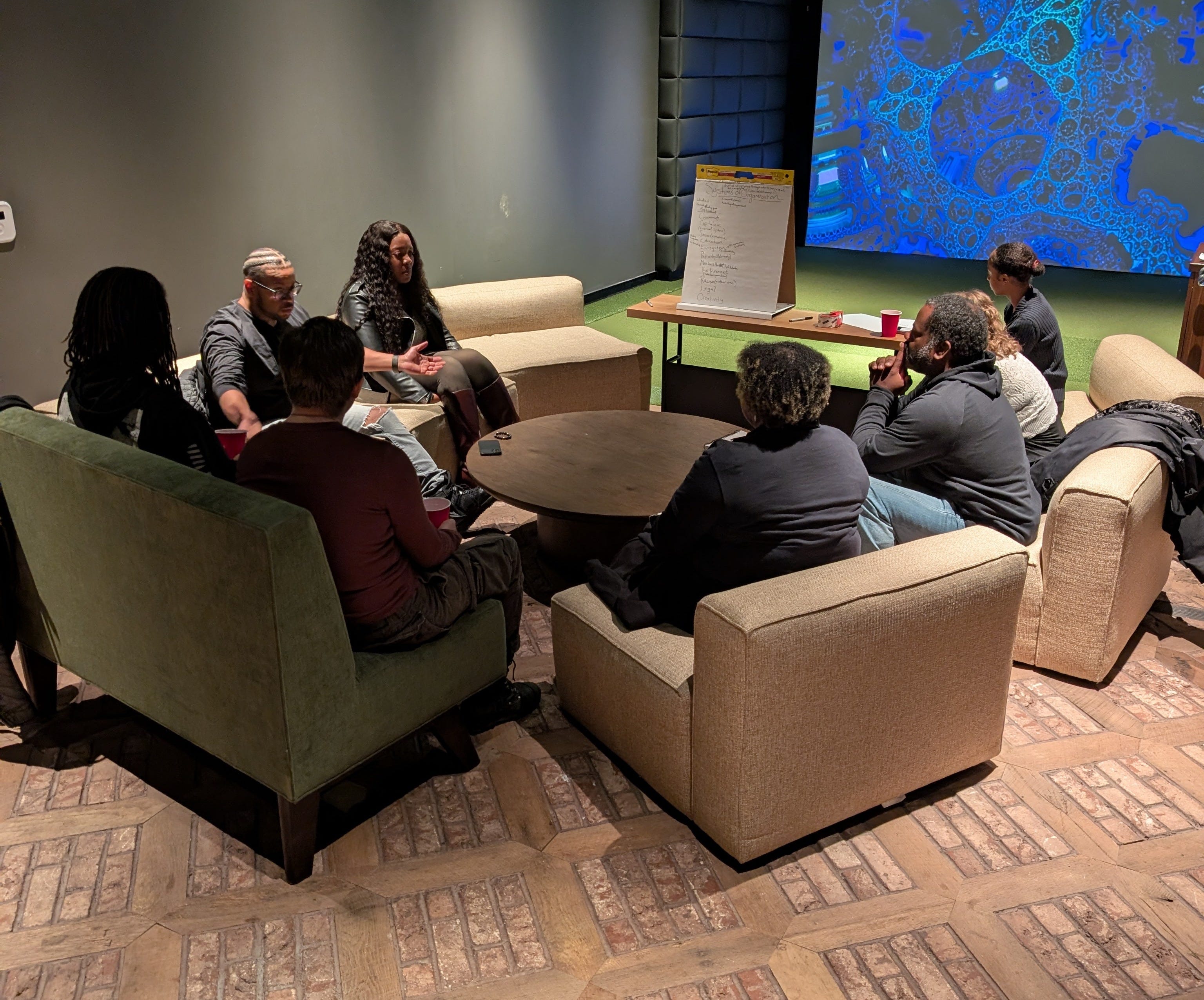
At the Salon, our goal is to understand the foundational problems we face as a society and see whether there’s anything we can do about them. So we started listing systems in our lives, not to judge them but to see where their cracks show up.
Systems that can be generative: Community, Ecosystems, Creativity, Language, Education(?)
Systems that often harm: Capitalism, Justice, Respectability, Social Hierarchies
Of course, any of these can tilt either way. That’s the thing: the structure is rarely the villain. But once humans get their grubby little hands on a set of tools, they somehow manage to bludgeon their neighbors with them. So the question becomes: How do we redesign a system so that most of us get to live from a regulated nervous system instead of constant threat response?
Building a Better System Starts With Values
We began by naming our collective values—the ingredients we’d want in any system we’d actually want to live inside. Interconnectedness, stewardship, belief that things can get better, emulating nature, trust, vulnerability, sustainability, interoception (knowing what’s happening inside you), curiosity, support, authenticity, acceptance of impermanence, inclusivity, holding space, and the golden rule.
Creating a real framework out of those values would take a year of Salons, maybe more. But I want to invite you into the exercise. Pick one system you interact with every day. Name the values that matter most to you. If you could rebuild that system around those values, what would change? Would it serve more people than the one we’ve inherited? What’s one tiny experiment you could run to test your theory?
Why System Change Is Still Possible
It’s easy to believe these big, entrenched systems can’t be changed. They feel ancient and immovable. But most systems are just… people. People doing their jobs the way they were shown. People making decisions based on what they ate for lunch. People who want something better but don’t know where to start.
And individuals can shift systems—but usually not by themselves. As the authors of Somebody Should Do Something point out, real change happens when individuals show up, get around other people, share ideas, pool resources, and make enough noise that someone has to listen. You can be one of those people. We’re trying to be, too.
What Stayed With Us
Before we closed the Salon, everyone shared the thought that stuck with them most. A few favorites:
“Our values create a web that can support people. It’s all connected.”
“Some people have spider-web thinking.”
“Dolly Parton is the queen of ‘Think Globally, Act Locally.’”
“The solar system came from rocks and debris spinning around each other until they finally bumped and sparked something new. We’re like that.”
“It’s messy. That’s okay.”
Join Us at The Salon ATL
The Salon ATL is a monthly conversation series where fewer than twenty people gather to have Big Talk about the world’s Big Issues. It’s not pretentious—but it is smart. If you crave a place to think big thoughts, have real conversations, meet interesting people, and eat snacks, come hang out with us. We’re taking back the art of conversation.
Get on the invite list >